
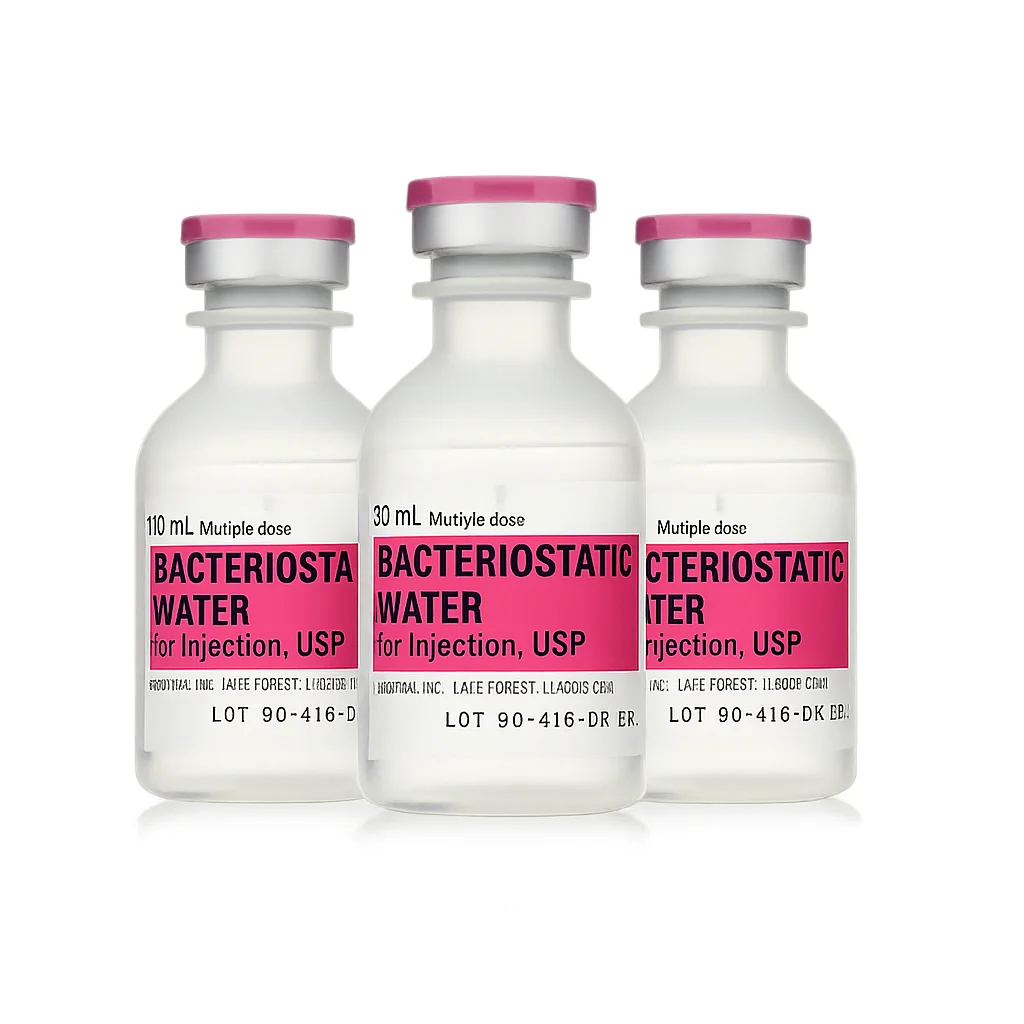
The History of Bacteriostatic Water: How Pharmaceutical Innovation Changed Sterile Medicine
Modern medicine depends on sterile pharmaceutical products every day. From hospitals and surgical centers to physician offices, outpatient clinics, pharmacies, and research laboratories, sterile injectable products have become an essential part of healthcare. Among these products, Bacteriostatic Water for Injection, USP has earned a well-recognized place because of its standardized manufacturing, quality controls, and pharmaceutical packaging.
Although bacteriostatic water is widely recognized today, its development is part of a much larger story that spans more than a century of scientific progress. Improvements in microbiology, sterile manufacturing, pharmaceutical engineering, packaging technology, and quality assurance transformed injectable medicine from a risky procedure into one supported by carefully controlled manufacturing standards.
Understanding the history of bacteriostatic water provides valuable insight into how today’s pharmaceutical industry developed and why sterile manufacturing remains one of the most carefully controlled areas of medicine.
COMPLETE GUIDE TO BAC WATER READ HERE
Medicine Before Sterile Manufacturing
During the nineteenth century, medicine looked dramatically different than it does today.
Healthcare providers had limited knowledge of microorganisms, contamination, and sterile manufacturing. Surgical procedures often carried significant risks because bacteria and contamination were not yet fully understood.
Injectable medicines existed, but preparing and handling them lacked the standardized systems that modern pharmaceutical manufacturers use today.
As medical science advanced, researchers began identifying the relationship between microorganisms and infection. Those discoveries completely changed healthcare and created demand for safer manufacturing methods.
The Birth of Modern Sterile Medicine
By the late 1800s and early 1900s, researchers and physicians increasingly recognized the importance of sterile techniques.
Hospitals began adopting improved sterilization practices. Medical equipment evolved. Glass syringes became more sophisticated, and laboratories developed better sterilization methods.
These advances laid the foundation for today’s sterile pharmaceutical industry.
Manufacturers realized that consistency was just as important as innovation. Producing sterile injectable products required carefully controlled manufacturing environments rather than relying solely on preparation at individual hospitals or pharmacies.
Pharmaceutical Manufacturing Begins to Change
Throughout the twentieth century, pharmaceutical manufacturing experienced enormous growth.
Instead of preparing injectable products individually at healthcare facilities, manufacturers invested in centralized production facilities specifically designed for pharmaceutical manufacturing.
These facilities introduced:
• Controlled production areas
• Standardized equipment
• Improved filtration systems
• Quality documentation
• Batch manufacturing
• Packaging standards
These changes made pharmaceutical products more consistent and helped improve quality across the industry.
Why Water Became One of the Most Important Pharmaceutical Ingredients
Water is one of the most widely used ingredients in pharmaceutical manufacturing.
However, producing pharmaceutical-grade water is far more complex than producing drinking water.
Modern pharmaceutical manufacturers invest heavily in sophisticated purification systems designed specifically for pharmaceutical production.
These systems may incorporate technologies such as reverse osmosis, distillation, deionization, ultraviolet treatment, advanced filtration, and continuous quality monitoring.
Each stage is designed to help manufacturers produce water that meets the applicable standards required for pharmaceutical manufacturing.
Because water is such an essential starting material, manufacturers devote extensive resources to maintaining purification systems and monitoring water quality.
The Development of Specialized Sterile Water Products
As pharmaceutical manufacturing became more advanced, manufacturers developed different sterile water products for different purposes.
Rather than producing one universal product, pharmaceutical companies created products designed for specific applications based on their approved labeling.
Today, healthcare professionals may encounter products such as Bacteriostatic Water for Injection, USP, Sterile Water for Injection, USP, and Sodium Chloride Injection, USP.
Each product has its own formulation, labeling, packaging, and intended uses according to the manufacturer’s instructions.
Understanding these differences helps explain why healthcare professionals rely on product labeling rather than assuming products are interchangeable.
The Evolution of Pharmaceutical Packaging
Packaging has changed just as dramatically as manufacturing.
Early pharmaceutical containers were relatively simple compared to today’s packaging systems.
Modern pharmaceutical packaging is engineered to support product identification, transportation, storage, and inventory management.
Today’s sterile pharmaceutical products commonly include pharmaceutical-grade glass or approved plastic containers, pharmaceutical rubber closures, aluminum crimp seals, protective flip-top caps, high-quality printed labels, lot numbers, expiration dates, and manufacturer identification.
Every component serves a purpose within the overall packaging system.
Even seemingly simple components like the rubber stopper or aluminum seal represent decades of engineering improvements.
Why Standardized Labels Changed Everything
Modern pharmaceutical labels provide significantly more information than labels used decades ago.
Today’s labels commonly include the product name, manufacturer, USP designation, volume, lot number, expiration date, and storage recommendations.
These details help healthcare providers, pharmacies, laboratories, distributors, and customers accurately identify products while supporting inventory management throughout the healthcare system.
Standardized labeling also helps reduce confusion when similar products are stored together.
The Rise of Pharmaceutical Quality Systems
As pharmaceutical manufacturing continued to expand, quality assurance became one of the industry’s highest priorities.
BUY THE BEST HOSPIRA BAC WATER HERE
Today’s manufacturers utilize comprehensive quality systems covering every stage of production.
These systems include raw material inspections, equipment qualification, environmental monitoring, process validation, packaging inspections, label verification, finished product review, and detailed documentation.
Rather than relying on a single inspection at the end of production, quality is built into the manufacturing process from beginning to end.
Leave a Reply