When people search for bacteriostatic water, they often discover that it is only one type of pharmaceutical water used throughout healthcare, pharmaceutical manufacturing, and research. In fact, several different pharmaceutical water products exist, each developed for specific purposes and produced according to well-established quality standards.
For researchers, healthcare professionals, and laboratory personnel, understanding the differences between these products is important because each has unique characteristics, labeling, and applications. Learning the terminology used throughout the pharmaceutical industry also helps buyers better understand product descriptions, manufacturer information, and educational resources when comparing products online.
https://bacteriostaticwatersupplies.com/
Whether you’re researching Hospira Bacteriostatic Water, learning about sterile water products, or simply trying to understand pharmaceutical terminology, having a broad understanding of pharmaceutical water products provides valuable context that goes beyond a single product page.
This guide explains the major categories of pharmaceutical water, how they differ from one another, and why understanding these distinctions is valuable for researchers and healthcare professionals alike.
⸻
What Is Pharmaceutical Water?
The phrase pharmaceutical water refers to highly purified water produced according to standards established for pharmaceutical manufacturing and healthcare applications.
Unlike ordinary drinking water, pharmaceutical water is manufactured under carefully controlled conditions and is intended for specific uses throughout pharmaceutical production, laboratory research, and healthcare.
Depending on the product, pharmaceutical water may be used during:
- Pharmaceutical manufacturing
- Laboratory preparation
- Healthcare settings
- Research environments
- Medical product production
Although these products share a common foundation, they are not interchangeable. Each category has its own characteristics, labeling, and intended purpose.
Understanding those differences helps researchers better interpret product information while comparing pharmaceutical products.
⸻
Water for Injection (WFI)
One of the most important pharmaceutical water products is Water for Injection, commonly abbreviated as WFI.
Water for Injection serves as a foundational material used during pharmaceutical manufacturing. It is produced according to strict quality standards and plays an important role in the preparation of many injectable pharmaceutical products.
Researchers often encounter the term “WFI” while reading pharmaceutical literature, manufacturer documentation, or educational resources related to injectable products.
Although many people confuse Water for Injection with bacteriostatic water, they are different products with different characteristics.
Understanding this distinction is one of the first steps in learning about pharmaceutical water.
⸻
Sterile Water for Injection
Another commonly encountered product is Sterile Water for Injection.
Sterile Water for Injection is supplied as sterile water without a preservative.
Researchers frequently see this product listed alongside bacteriostatic water because both are widely used throughout healthcare and laboratory environments.
Product labels clearly identify the specific type of pharmaceutical water being supplied, making it important for researchers to read product descriptions carefully rather than assuming all pharmaceutical water products are identical.
Learning to distinguish between Sterile Water for Injection and bacteriostatic water helps researchers become more familiar with pharmaceutical terminology.
⸻
Bacteriostatic Water
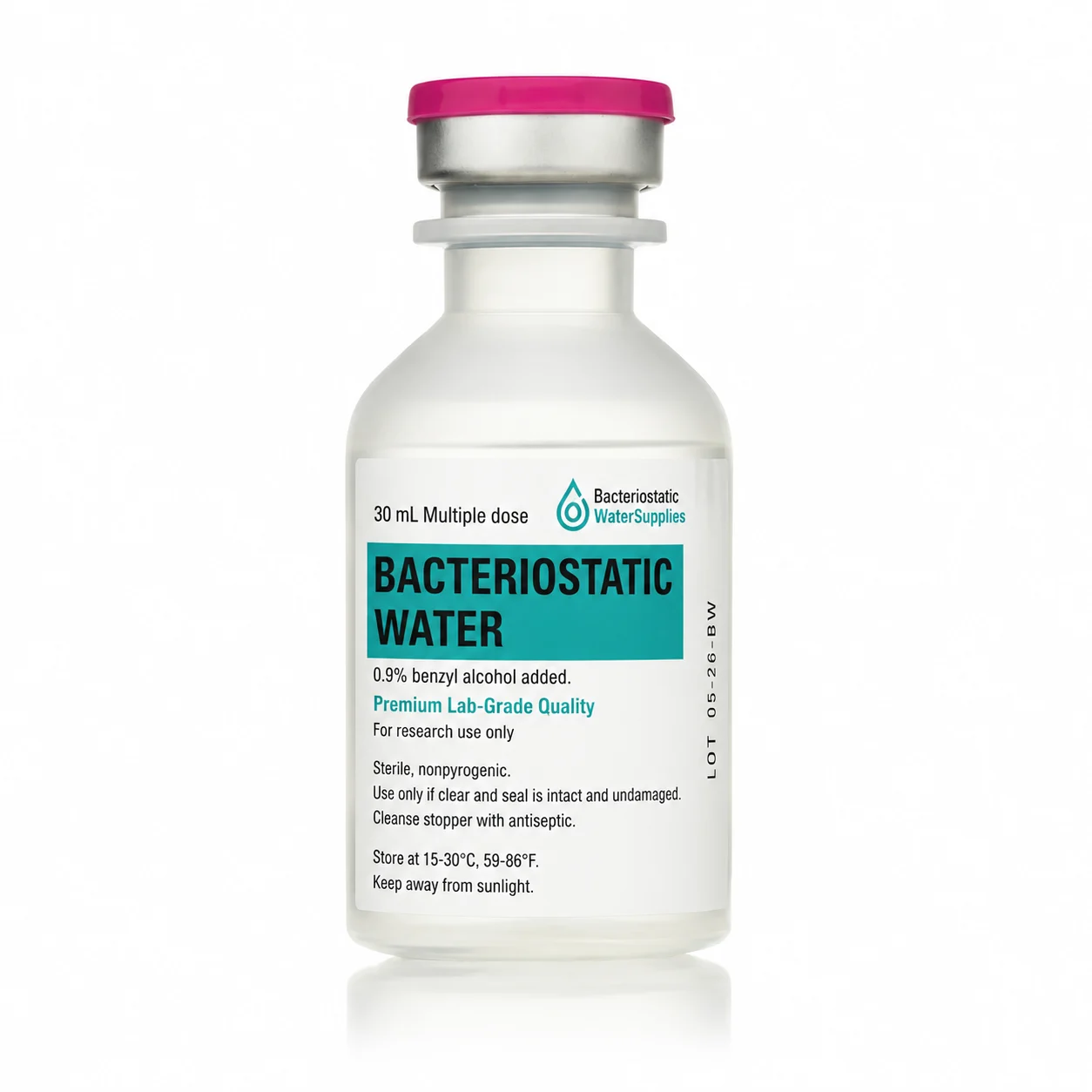
Among pharmaceutical water products, Bacteriostatic Water for Injection is one of the most widely recognized.
Researchers searching for Hospira Bacteriostatic Water often notice that the product contains 0.9% benzyl alcohol, which functions as a preservative.
The presence of benzyl alcohol distinguishes bacteriostatic water from preservative-free sterile water products.
Understanding this difference helps researchers correctly identify products while reviewing labels and product descriptions.
Educational resources often explain this distinction because it represents one of the most common questions researchers ask.
⸻
Irrigation Water
Another category of pharmaceutical water is Sterile Water for Irrigation.
Although the name appears similar to other pharmaceutical water products, sterile irrigation water is manufactured, labeled, and intended differently.
Researchers frequently encounter this product while reviewing pharmaceutical catalogs or educational materials.
Reading product labels carefully helps distinguish irrigation products from other sterile water products.
The similarity in names demonstrates why understanding pharmaceutical terminology is valuable when comparing products.
⸻
Why Are There Different Types of Pharmaceutical Water?
One of the most common questions researchers ask is why multiple pharmaceutical water products exist.
The answer is straightforward.
Different healthcare and pharmaceutical applications require products with different characteristics.
Rather than producing one product for every situation, manufacturers produce several categories designed to meet different requirements.
This approach allows healthcare professionals, researchers, and manufacturers to select products that align with the information provided in the product labeling and documentation.
Understanding these categories helps reduce confusion while improving familiarity with pharmaceutical terminology.
⸻
Reading Product Labels
Product labels remain one of the best educational resources available.
Researchers frequently review labels to identify:
- Product name
- Manufacturer
- Product volume
- Ingredient information
- Product type
- Lot number
- Expiration information
Learning to identify these sections helps researchers compare products more efficiently while improving purchasing confidence.
Rather than focusing only on the product title, experienced buyers review the complete label before making purchasing decisions.
⸻
Why Manufacturer Information Matters
Manufacturer information helps researchers organize purchasing records and compare products more effectively.
Researchers often review manufacturer information to:
- Identify products
- Compare listings
- Organize inventory
- Maintain purchasing records
- Improve documentation
Searching specifically for Hospira Bacteriostatic Water is one example of how manufacturer information helps researchers locate familiar products while comparing available options.
⸻
Educational Resources Have Become Essential
Years ago, researchers often relied on printed catalogs and manufacturer literature.
Today, educational articles provide valuable context that helps explain pharmaceutical terminology and product information.
Researchers commonly search topics such as:
- What is bacteriostatic water?
- What is sterile water?
- What does USP mean?
- What is benzyl alcohol?
- How do pharmaceutical water products differ?
Educational resources answer these questions while helping buyers better understand product information before making purchasing decisions.
Leave a Reply