
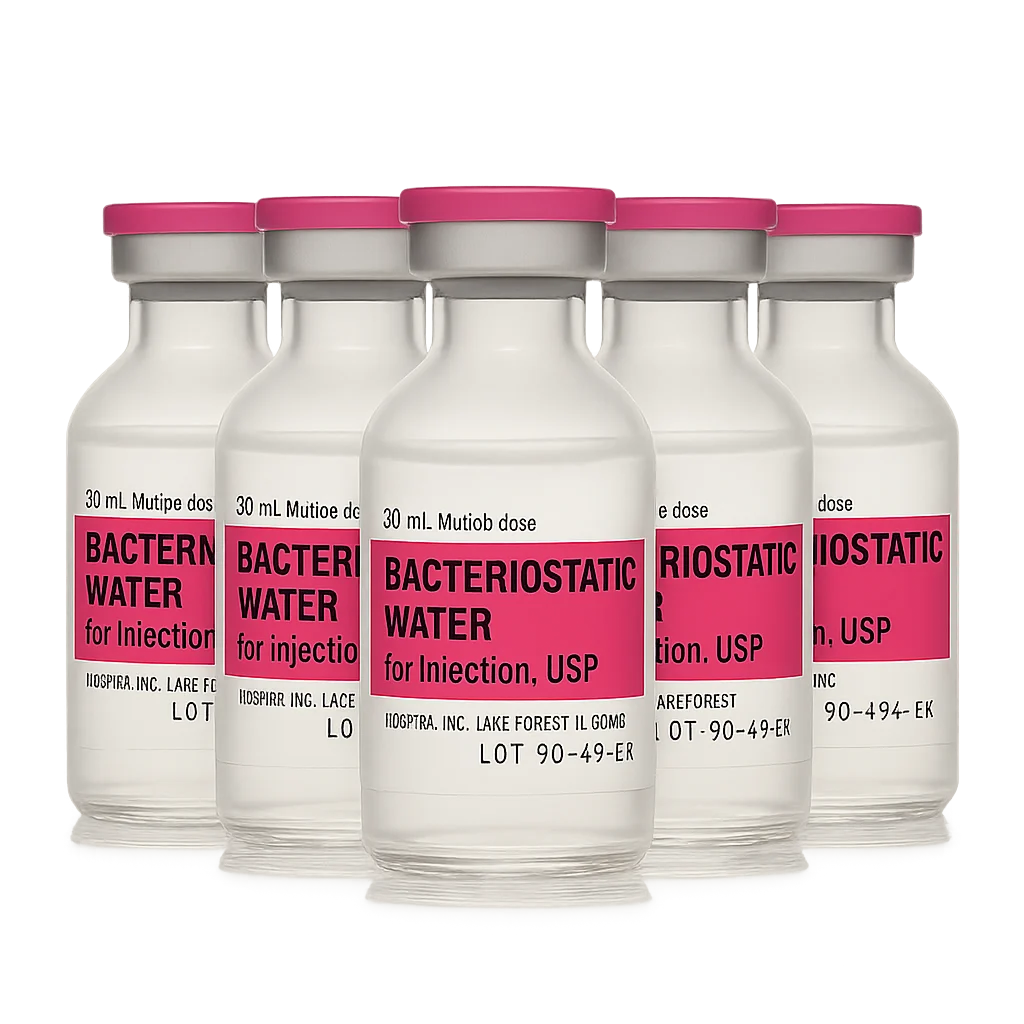
When researchers search for bacteriostatic water, they are often focused on finding a product for immediate laboratory or healthcare needs. However, relatively few people stop to consider how bacteriostatic water became one of the most widely recognized pharmaceutical diluents used today.
The development of modern pharmaceutical water products reflects decades of progress in sterile manufacturing, quality standards, packaging technology, and pharmaceutical science. From the early use of sterile water for injections to the introduction of preservative-containing multi-dose products, bacteriostatic water has evolved alongside advances in medicine and pharmaceutical manufacturing.
Today, products such as Hospira Bacteriostatic Water are familiar to researchers and healthcare professionals because they represent part of a long history of improvements in pharmaceutical production and quality systems.
This guide explores the evolution of bacteriostatic water, explains why preservative-containing water products were developed, and highlights how advances in manufacturing, packaging, and distribution have shaped the products available today.
The Early Need for Sterile Pharmaceutical Water
As injectable medications became more common during the twentieth century, manufacturers needed highly purified water that could be used during pharmaceutical preparation.
Water intended for injection required strict attention to purity because it would be used in products entering the body. Over time, standards for Water for Injection (WFI) were developed to support pharmaceutical manufacturing and injectable medications. (DailyMed)
The development of sterile pharmaceutical water became one of the foundations of modern injectable medicine.
Why Preservatives Became Important
As pharmaceutical practice evolved, manufacturers recognized that some applications benefited from a product that could be accessed more than once under appropriate conditions.
To address this need, manufacturers developed Bacteriostatic Water for Injection, USP, which contains 0.9% benzyl alcohol as a preservative. This preservative helps inhibit the growth of bacteria, distinguishing bacteriostatic water from preservative-free sterile water. (DailyMed)
The addition of a preservative represented an important step in the evolution of pharmaceutical water products because it expanded the ways certain products could be supplied and used within their labeled instructions.
Understanding the Meaning of “Bacteriostatic”
The word bacteriostatic simply means that something inhibits the growth or reproduction of bacteria rather than necessarily killing them outright.
This distinction explains why bacteriostatic water is different from sterile water.
Researchers frequently learn that:
- Sterile water contains no preservative.
- Bacteriostatic water contains 0.9% benzyl alcohol.
- The preservative is included specifically for its bacteriostatic properties. (ScienceDirect)
Understanding this terminology helps researchers better interpret product labels and pharmaceutical documentation.
The Development of USP Standards
As pharmaceutical manufacturing became increasingly sophisticated, standardized quality references became essential.
The United States Pharmacopeia (USP) publishes standards for many pharmaceutical products and ingredients used in the United States.
Products identified as Bacteriostatic Water for Injection, USP are described according to those published standards, helping create consistency in terminology and product descriptions across the industry. (DailyMed)
These standards have contributed to greater consistency in pharmaceutical manufacturing and product identification.
Improvements in Pharmaceutical Manufacturing
Modern pharmaceutical production looks very different from manufacturing several decades ago.
Today’s facilities commonly use:
- Automated production equipment
- Controlled manufacturing environments
- Environmental monitoring
- Advanced filling systems
- Automated labeling
- Computerized documentation
These improvements help manufacturers produce pharmaceutical products with greater consistency while supporting detailed quality systems.
Although equipment continues to evolve, the objective remains the same: producing pharmaceutical products within carefully controlled manufacturing environments.
Advances in Glass Packaging
Packaging has also changed dramatically.
Earlier pharmaceutical containers have gradually been replaced by highly engineered glass vials, closures, and packaging systems designed for pharmaceutical applications.
https://bacteriostaticwatersupplies.com/collections/all
Modern packaging helps support:
- Product identification
- Transportation
- Inventory organization
- Label readability
- Warehouse efficiency
Packaging technology has become just as important as manufacturing itself.
Better Product Labels
Pharmaceutical labels have become increasingly informative.
Researchers now expect labels to include information such as:
- Product name
- Manufacturer
- Ingredient information
- Product volume
- Lot identification
- Expiration information
Clear labeling supports purchasing decisions, inventory management, and product identification throughout the supply chain.
The Growth of Global Distribution
Another major change has been the expansion of pharmaceutical distribution networks.
Products now move through sophisticated supply chains involving manufacturers, wholesalers, distributors, warehouses, and healthcare suppliers before reaching researchers and healthcare professionals.
Modern logistics systems provide:
- Better inventory visibility
- Improved order tracking
- Faster transportation
- More efficient warehouse management
These advances help pharmaceutical products reach customers more efficiently than in previous decades.
Why Educational Resources Have Become More Important
Years ago, researchers often relied primarily on printed catalogs or manufacturer literature.
Today, educational resources are available online and help answer common questions about pharmaceutical products.
Researchers frequently search topics such as:
- What is bacteriostatic water?
- What ingredients does it contain?
- What does USP mean?
- What is benzyl alcohol?
- How is bacteriostatic water different from sterile water?
Educational articles have become an important complement to product pages because they provide context beyond basic product descriptions.
The Continued Importance of Manufacturer Information
Researchers often search specifically for manufacturers, including Hospira Bacteriostatic Water, because manufacturer information helps identify products and organize purchasing records.
Searching by manufacturer also allows researchers to compare product information more efficiently while locating educational resources related to the products they are evaluating.
Looking Toward the Future
The pharmaceutical industry continues to evolve.
Future improvements may include:
- Greater automation
- Smarter inventory systems
- Enhanced packaging technologies
- Improved supply chain visibility
- Expanded digital product information
Although manufacturing technology continues to advance, accurate product information and quality systems remain fundamental to pharmaceutical production.
Frequently Asked Questions
Why was bacteriostatic water developed?
Bacteriostatic water was developed to provide sterile water for injection with a preservative, allowing it to serve specific labeled purposes that differ from preservative-free sterile water. (DailyMed)
What makes bacteriostatic water different from sterile water?
The primary difference is the presence of 0.9% benzyl alcohol as a preservative in bacteriostatic water. (DailyMed)
Why do researchers search specifically for Hospira Bacteriostatic Water?
Many researchers search by manufacturer because it helps them identify the product they are looking for and compare product information more efficiently.
Final Thoughts
The evolution of bacteriostatic water reflects decades of advancement in pharmaceutical manufacturing, quality standards, packaging, and distribution. From the development of sterile water for injection to the introduction of preservative-containing multi-dose products and modern automated production systems, pharmaceutical water products have continually evolved to support healthcare and research.
Today, products such as Hospira Bacteriostatic Water are recognized by researchers because they are part of this broader history of pharmaceutical innovation. Understanding that history provides valuable context for product labels, manufacturer information, and modern pharmaceutical supply chains, while helping researchers make more informed decisions when evaluating bacteriostatic water products.
Leave a Reply