
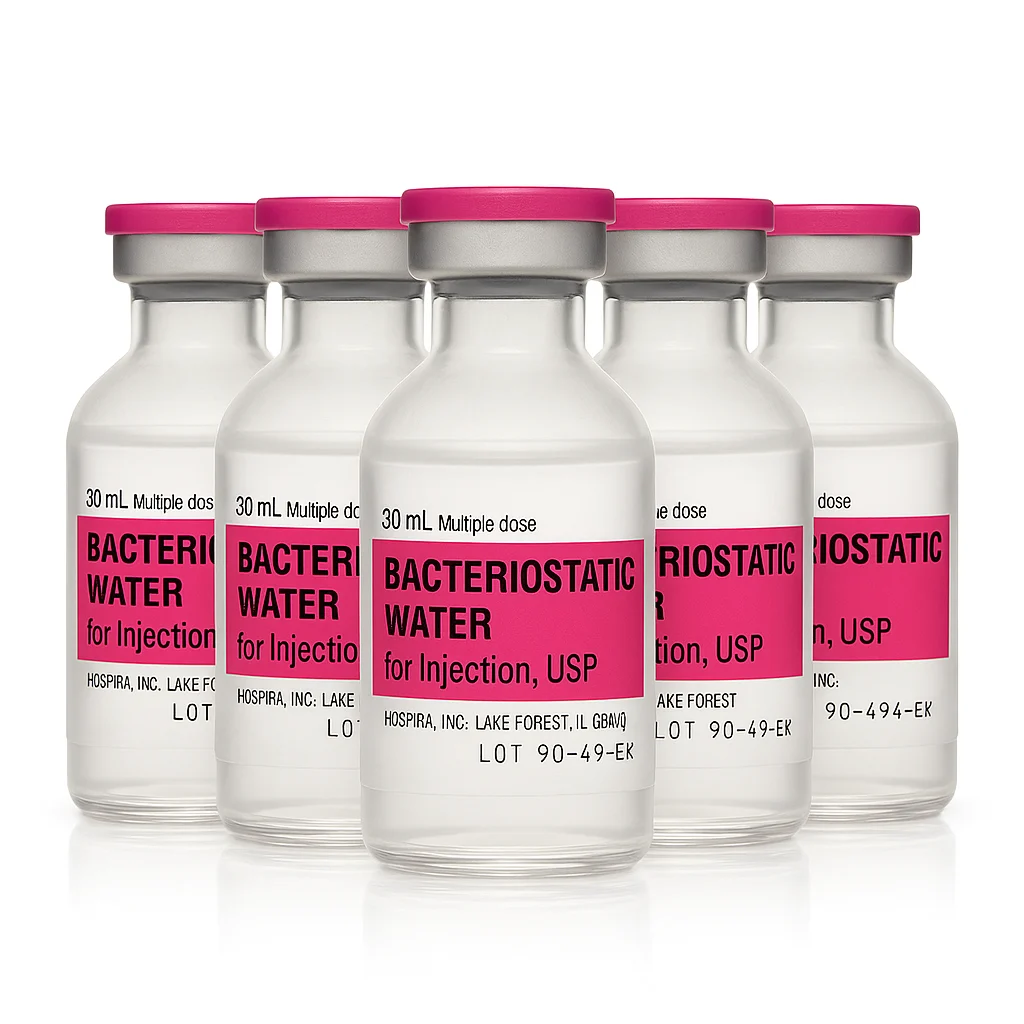
How Can You Tell If a Bacteriostatic Water Vial Seal Is Intact?
When bacteriostatic water arrives in the mail, most customers immediately look at the label and expiration date.
But there is another important part of the product worth inspecting: the container closure.
A pharmaceutical vial is not simply a bottle with a lid.
The container, stopper, seal, and protective components work together as a packaging system.
Understanding what these components do can help customers inspect their bacteriostatic water order more intelligently and know when something deserves closer attention.
What Is a Pharmaceutical Container-Closure System?
A container-closure system consists of the packaging components that contain and protect a pharmaceutical product.
For a vial-type product, this may include:
- The vial or bottle
- Elastomeric stopper
- Aluminum crimp or seal
- Protective flip-off cap
- Pharmaceutical label
The exact configuration can vary by manufacturer.
These components work together to help maintain the finished product throughout storage and distribution.
Why the Stopper Matters
The stopper is one of the most important components of a pharmaceutical vial.
It creates a physical closure between the contents of the vial and the outside environment.
Stopper materials are selected based on their suitability for pharmaceutical packaging and compatibility with the product.
The stopper should sit properly within the container system and should not appear obviously displaced or damaged.
What Is the Aluminum Crimp?
Many pharmaceutical vials use an aluminum component around the neck of the bottle to secure the stopper.
This crimp helps hold the closure system in place.
Customers may notice that different manufacturers use different crimp designs.
The appearance can vary without necessarily indicating a problem.
What matters is whether the closure appears properly attached and consistent with the manufacturer’s packaging.
What Does the Flip-Off Cap Do?
Many vial products have a plastic flip-off cap positioned over part of the closure.
The cap protects the access area and provides a visible component that customers often associate with an unopened vial.
However, packaging designs vary.
Customers should avoid assuming that cap color or shape alone proves product identity or complete container integrity.
The entire closure system should be considered.
Does the Plastic Cap Create the Sterile Barrier?
The visible plastic component is only one part of the packaging system.
The stopper and secured vial closure are critical components of the finished pharmaceutical package.
This is why judging the condition of a vial solely by looking at the outer plastic cap can be misleading.
If there is a question about a specific manufacturer’s closure configuration, the manufacturer or supplier can provide product-specific information.
What Should an Unopened Vial Look Like?
Customers should expect a finished pharmaceutical vial to arrive with packaging that appears consistent and undamaged.
Things worth inspecting include:
- Cracks in the container
- Visible leakage
- A loose or obviously distorted closure
- Missing packaging components
- Significant label damage
- Unusual discoloration
- Visible particles or other abnormal appearance
- Evidence of physical damage during shipping
A minor cosmetic difference does not automatically mean the product has been compromised, but obvious structural damage should be investigated.
Why Shipping Damage Matters
Packages move through several stages between the supplier and the customer.
They may travel on conveyor systems, trucks, sorting facilities, and local delivery vehicles.
Good shipping packaging helps protect pharmaceutical containers from mechanical damage.
However, packages can occasionally be crushed, dropped, or otherwise damaged during transportation.
This makes inspection upon delivery a useful practice.
What If the Outer Box Is Damaged?
A damaged shipping box does not automatically mean the pharmaceutical product inside is damaged.
Likewise, an intact cardboard box does not prove the individual container is perfect.
Customers should inspect both.
If the outer package shows significant crushing, moisture, punctures, or other damage, examine the individual products carefully before assuming everything inside is unaffected.
Why Leakage Is an Important Warning Sign
Visible leakage around a pharmaceutical vial should be taken seriously.
Possible signs include:
- Moisture inside the package
- Residue around the bottle
- An unexpectedly low liquid level combined with visible leakage
- A wet or damaged label
- Liquid around the closure
If leakage is suspected, customers should avoid simply wiping the container off and assuming everything is normal.
Contact the supplier and document the condition with photographs.
What If the Flip-Off Cap Comes Loose During Shipping?
Packaging components can occasionally be damaged or displaced during transportation.
Because different manufacturers use different vial systems, the significance of a loose cap should be evaluated in context.
Customers should not guess.
If a cap appears detached, broken, or inconsistent with the expected packaging, contact the supplier before using the product.
Clear photos of the closure can make the issue easier to evaluate.
Why You Should Not Re-Seal a Damaged Vial Yourself
A pharmaceutical vial that appears to have a compromised container closure should not simply be pushed back together or repaired at home.
Doing so does not establish that the original package integrity has been restored.
The correct approach is to preserve the product, document the issue, and contact the supplier or manufacturer.
Why Bottle Appearance Can Change Between Manufacturers
Not all bacteriostatic water products use identical containers.
Manufacturers may use different:
- Bottle materials
- Vial shapes
- Stopper designs
- Aluminum seals
- Plastic caps
- Label layouts
Customers familiar with one brand may therefore be surprised when another bacteriostatic water product looks different.
Different appearance alone does not establish that something is wrong.
Why Packaging Can Change Over Time
Manufacturers can update packaging.
A familiar product may eventually arrive with a slightly different cap, label, or container appearance.
This is why current manufacturer information is more reliable than an old photograph found online.
Suppliers should also update product photography when meaningful packaging changes occur.
Why the Label Is Part of Product Verification
The closure helps protect the product, while the label helps identify it.
Customers should review both.
Useful identifying information may include:
- Manufacturer
- Complete pharmaceutical name
- Labeled volume
- Preservative information
- Lot number
- Expiration date
- Storage instructions
A physically intact vial with unclear or inconsistent labeling should still be investigated.
What About the Liquid Itself?
The liquid should also be visually inspected according to the manufacturer’s product description.
Bacteriostatic water is generally expected to appear clear and colorless.
Visible particles, unusual cloudiness, discoloration, or other unexpected changes should be treated as reasons to contact the supplier or manufacturer.
However, normal appearance alone cannot prove complete pharmaceutical quality or sterility.
Why Sterility Cannot Be Confirmed by Looking at a Seal
An intact-looking closure is reassuring, but customers cannot visually confirm microbiological sterility.
Sterility assurance depends on the manufacturer’s validated manufacturing and quality systems.
Inspection after delivery is primarily useful for detecting visible damage or abnormalities.
It should not be treated as a substitute for pharmaceutical manufacturing controls.
What Should You Do if Something Looks Wrong?
If you receive bacteriostatic water and something appears abnormal:
- Keep the product and packaging.
- Avoid altering the closure.
- Take clear photographs.
- Record the order information.
- Contact the supplier.
- Provide the lot number and expiration date if requested.
This gives the supplier useful information for evaluating the issue.
Why Buying From a Responsive Supplier Matters
Product problems are uncommon, but customer service matters when they occur.
A reliable medical supply business should have a clear process for responding to damaged shipments, incorrect products, and packaging concerns.
Customers should be able to contact the company rather than being left to guess whether an unusual-looking vial is acceptable.
Frequently Asked Questions
How can I tell if a bacteriostatic water vial has been damaged?
Look for cracks, leakage, displaced closures, broken packaging components, severe label damage, or abnormal appearance.
Is the plastic flip-off cap the only seal?
No. Pharmaceutical vial closure systems typically involve multiple components, including the stopper and secured closure.
What should I do if the cap is loose?
Contact the supplier for product-specific guidance rather than assuming the vial is either safe or unusable.
Does an intact cap prove the product is sterile?
No. Sterility is established through pharmaceutical manufacturing and quality systems, not visual inspection alone.
What if the vial is leaking?
Document the condition and contact the supplier. Do not assume the product remains suitable.
Can different brands use different caps?
Yes. Container and closure designs can vary between manufacturers.
Final Thoughts
The closure on a bacteriostatic water vial is more complex than it may appear.
The container, stopper, secured seal, protective cap, and label all contribute to the finished pharmaceutical package.
Customers do not need to become packaging experts, but knowing what to inspect can help identify obvious shipping damage or product abnormalities.
When bacteriostatic water arrives, review the container, closure, label, lot number, expiration date, and overall product condition.
WHERE TO BUY 30ML HOSPIRA BACTERIOSTATIC WATER
If something looks significantly different, damaged, or compromised, contact the supplier rather than trying to repair or evaluate the product yourself.
A few seconds of inspection can provide valuable peace of mind and help ensure that any shipping issue is addressed promptly.
Leave a Reply